
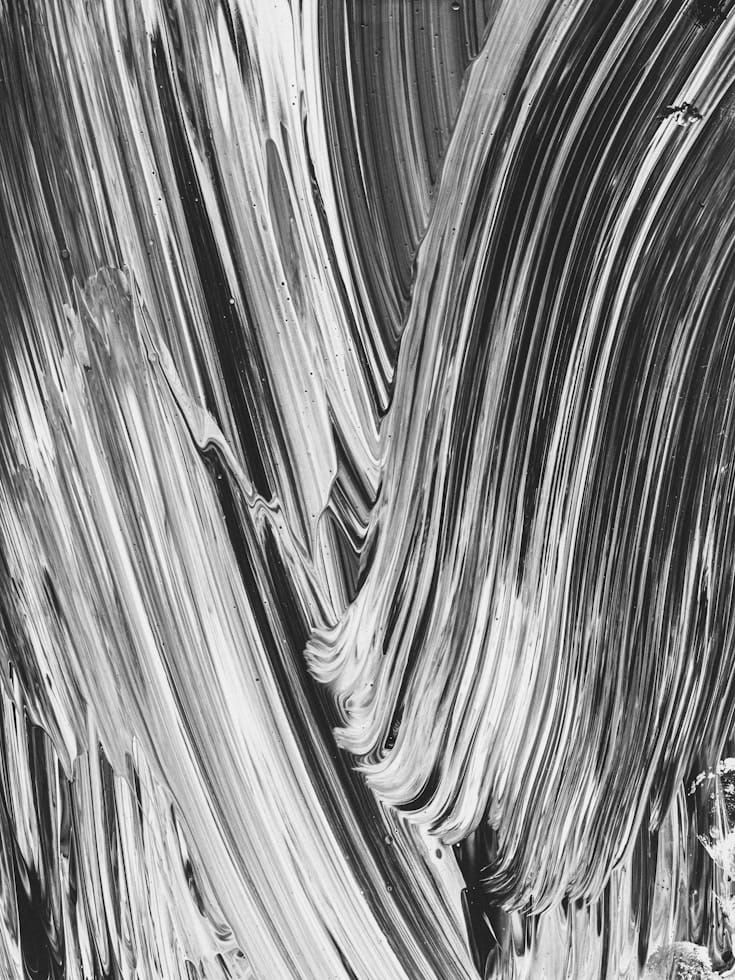
There are moments in history when everything shifts—quietly at first, then all at once. What once felt fixed begins to loosen. Rules dissolve. New ways of seeing emerge, not as gentle evolution, but as necessary rupture. In art, these moments gave rise to movements that redefined perception itself. In textiles, in fashion, in the language of dressing, the same revolutions have taken place—only less acknowledged, less studied, yet equally profound.
Fabric Echoes exists within that lineage of transformation.
Because what we wear has never been static. It has always moved—through time, through culture, through intention—responding to the world as it changes, and shaping it in return.
There was a time when clothing followed strict codes, much like academic painting once did. Materials, silhouettes, and techniques were governed by tradition, by hierarchy, by expectation. To dress was to conform to a visual order that reflected stability, structure, and control. But as life accelerated, as societies shifted, so too did the language of fabric.
The first break was subtle.
Like the Impressionists stepping outside their studios to capture fleeting light, textiles began to respond to immediacy. Clothing became lighter, more fluid, more attuned to movement and environment. The rigid gave way to the responsive. Fabrics were no longer only about permanence—they began to capture moments. The way a garment moved in wind, the way it reflected sunlight, the way it existed within a living, changing world.
This was the beginning of awareness.
Then came individuality.
Where once there had been shared rules, there emerged personal interpretation. Tailors, designers, and makers began to move away from uniformity, developing distinct approaches to form and construction. A seam was no longer just a seam—it became expression. A cut became philosophy. Materials were chosen not only for function, but for what they communicated. The wearer, too, became part of this language, selecting not just what fit, but what resonated.
Fabric began to speak in many voices.
Color, once bound to nature and tradition, broke free next. No longer confined to representing the world as it was, it began to reflect how it felt. Bold, unexpected combinations appeared—colors chosen not for accuracy, but for emotion. A garment could now evoke rather than imitate. It could disrupt expectation, provoke reaction, create presence.
This was liberation.
Then came reconstruction.
Just as Cubism fractured and reassembled reality, textiles and fashion began to challenge form itself. Garments were no longer required to follow the body—they could reinterpret it. Structure became experimental. Pieces layered, intersected, shifted perspective depending on movement and viewpoint. Clothing was no longer simply worn—it was experienced from multiple angles, in multiple dimensions.
The body was no longer the limit. It was the beginning.
Emotion followed.
There were moments when textiles became intensely expressive—where distortion, exaggeration, and contrast were used not for aesthetics, but for feeling. Materials were pushed beyond comfort, silhouettes beyond convention. Clothing became a direct extension of inner states, not always harmonious, not always pleasing, but undeniably human.
Because truth is not always balanced. Sometimes, it is raw.
Then came speed.
Modern life accelerated, and with it, the materials and methods of production. Synthetic innovations, industrial processes, and mass creation reshaped the landscape of textiles. Movement, energy, and efficiency became dominant forces. Clothing began to reflect not stillness, but motion. Not tradition, but momentum.
And yet, within this, something was lost.
In response, disruption emerged.
There were moments—quiet, radical—where the very definition of clothing was questioned. What makes a garment meaningful? Is it the material, the maker, the intention, or the perception? Objects once considered ordinary were recontextualized. The boundaries between fashion, function, and concept blurred. The familiar became unfamiliar.
And in that space, new possibilities opened.
Then came the inward turn.
Textiles began to explore not only the external world, but the internal one. Symbolism, abstraction, and subconscious influence entered design. Patterns became less literal, more intuitive. Forms suggested rather than defined. What was worn became a reflection not only of culture, but of thought, of dream, of unseen layers of the self.
And finally, there was release.
A moment where form dissolved almost entirely. Where fabric became field, presence, atmosphere. Where the act of creation itself—the movement of hand, the interaction with material—became as important as the outcome. Clothing, in its most abstract sense, returned to something essential: the relationship between human and material, unfiltered.
These shifts did not happen in isolation.
Each movement, each transformation, responded to what came before, while preparing the ground for what would follow. Together, they form an ongoing conversation—a continuous redefinition of what textiles are, what they mean, and how they exist within our lives.
Fabric Echoes brings this conversation into focus.
Not as history, but as awareness.
Because when we begin to see clothing not as static objects, but as part of an evolving language, something changes. We recognize that what we wear today is not separate from what was worn before. That every material carries influence, every form carries memory, every choice carries direction.
And within that recognition, there is power.
To choose differently.
To see more clearly.
To participate, not unconsciously, but intentionally.
Because fabric, like art, is never finished.
It is always becoming.