
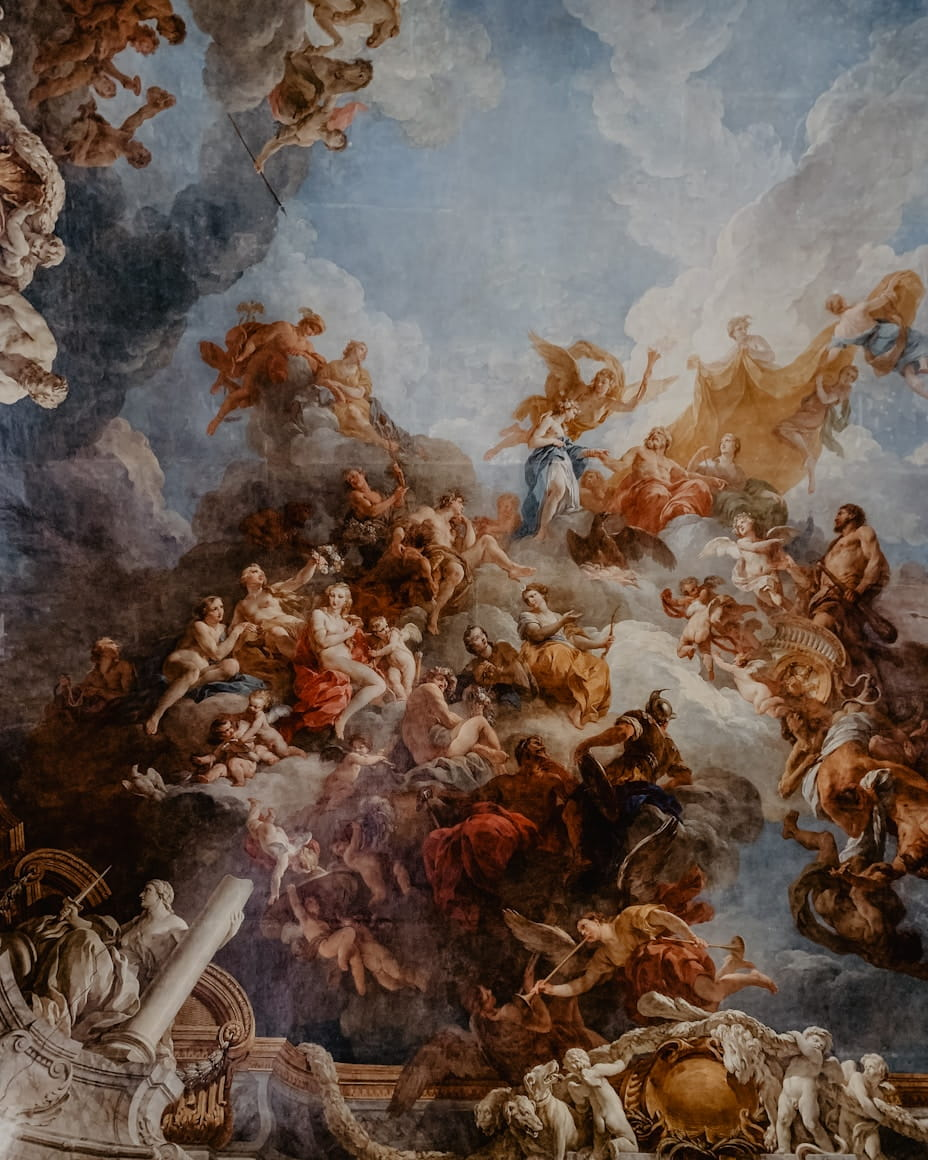
There was a time when fabric, like landscape in early painting, existed only in the background.
It framed the human figure but was never meant to be seen on its own. Clothing served its purpose quietly—covering, protecting, supporting the narrative of the body it surrounded. The attention was placed on status, on identity, on the wearer. The textile itself remained secondary, unnoticed, almost invisible in its contribution.
Fabric Echoes begins where that invisibility ends.
Because just as landscape painting evolved from setting to subject, textiles have undergone their own quiet transformation—from passive material to central voice. And in that shift lies a deeper story about how we, as humans, relate to what surrounds and touches us most intimately.
In earlier traditions, fabric carried meaning, but not autonomy. It was chosen to support a role: ceremonial garments, structured attire, layered systems of dress that communicated hierarchy and order. The textile was important, but always in service of something greater. Like the painted backgrounds of ancient works, it created context, not focus.
Then, gradually, symbolism emerged.
Materials began to represent more than function. Certain fabrics became associated with purity, others with power, others with transition or protection. Patterns were not decorative—they were messages. Repetition, geometry, and motif carried cultural and spiritual weight. A garment could speak without words, not because of its shape alone, but because of the fabric that composed it.
This was the moment fabric began to mean.
With time came understanding.
As artists once discovered perspective—realizing that space, distance, and atmosphere could be studied and recreated—so too did textile makers deepen their relationship with material. They learned how fibers behaved, how they aged, how they responded to tension, light, moisture, and movement. Fabric was no longer just selected—it was understood. Crafted with intention. Developed with knowledge.
The invisible became precise.
Then came identity.
There were periods in which textiles became expressions of place. Regions, climates, and cultures shaped the materials people wore. What could be grown, woven, treated, or preserved became part of a collective identity. Just as landscapes once defined nations, textiles defined belonging. To wear a certain fabric was to carry the land, the labor, and the legacy of a place.
Clothing became geography.
But as awareness deepened, so did emotion.
There were moments when fabric moved beyond representation and into experience. Materials were chosen not only for what they symbolized, but for what they evoked. Softness, weight, fluidity, resistance—these became emotional languages. A garment could comfort, empower, restrict, or release. The relationship between body and textile became more intimate, more psychological.
Fabric was no longer outside us. It became part of how we felt.
Then came light.
Not as illumination, but as interaction. Fabrics began to be understood through how they responded to their environment. How they absorbed or reflected light. How they changed throughout the day. How they revealed different aspects of themselves in motion. Like the Impressionists discovering that light itself could be the subject, textiles revealed that perception was not fixed—it shifted with context.
Nothing was ever just one thing.
With modernity, abstraction arrived.
Forms loosened. Structures softened. Traditional meanings fragmented. Fabrics were no longer bound to historical expectations—they could be reinterpreted, reimagined, reduced to texture, to color, to presence. Clothing became less about describing the world and more about expressing an internal state within it.
The material remained, but the message changed.
And now, we arrive at a moment of awareness once again.
A moment where fabric, like landscape in contemporary art, carries a new responsibility. No longer just expression, but reflection. Not only of identity, but of consequence. Materials speak of origin, of impact, of sustainability, of time. What we wear today is connected to systems far beyond what is visible—production, environment, labor, longevity.
Fabric has become a mirror.
And within that mirror, we are asked to look more closely.
There is, quietly, a return happening.
A return to touch. To understanding. To direct connection with material. Just as some painters step back into nature to experience it firsthand, there are those who seek to reconnect with textiles—not through mass selection, but through awareness. Through knowing what something is made of, how it was created, and what it carries.
This is not nostalgia.
It is recognition.
Fabric Echoes exists within this recognition—to reveal that textiles were never meant to remain in the background. That they have always been active participants in human experience. That what we wear is not separate from the world, but deeply connected to it.
From unnoticed to symbolic.
From functional to expressive.
From background to presence.
Fabric, like landscape, was always more than we allowed ourselves to see.
Now, we are learning to see it again.